Wet belt replacement
A wet belt runs inside the engine, lubricated by the oil, and as it ages it sheds material that collects in the oil pickup and starves the pump. We replace them on the VW Group 1.5 TSI, on the Ford 1.0 EcoBoost, and on the other German marques, and the first thing we do is establish whether the car actually has one, because plenty of owners are told it does when it does not.
What is a wet belt and why does it fail?
A wet belt is a cam belt that runs inside the engine, bathed in engine oil, rather than outside behind a dry cover. Running it in oil makes it quieter and lets the engine be built more compactly, which is why manufacturers moved to it.
The problem is what happens as it ages. The belt breaks down and sheds material into the oil. That debris collects in the oil pickup strainer, and a blocked pickup starves the engine of oil pressure. So a worn wet belt can wreck an engine without ever snapping, by cutting off its oil supply first. That is the part owners are rarely told.
Does my car actually have a wet belt?
This is the first thing to establish, and it is where a lot of bad advice circulates. Within the Volkswagen Group the wet belt is on the1.5 TSI, broadly from 2017 onward. The earlier 1.0, 1.2 and 1.4 engines in the same family do not have one, so being told your Golf needs a wet belt because Golfs have wet belts is not a diagnosis.
Cars commonly fitted with the 1.5 TSI include:
- Volkswagen Golf, Tiguan, T-Roc, T-Cross and Passat
- Skoda Octavia, Superb, Kamiq and Karoq
- SEAT and Cupra Leon, Ateca and Formentor
- Audi A3 and Q2
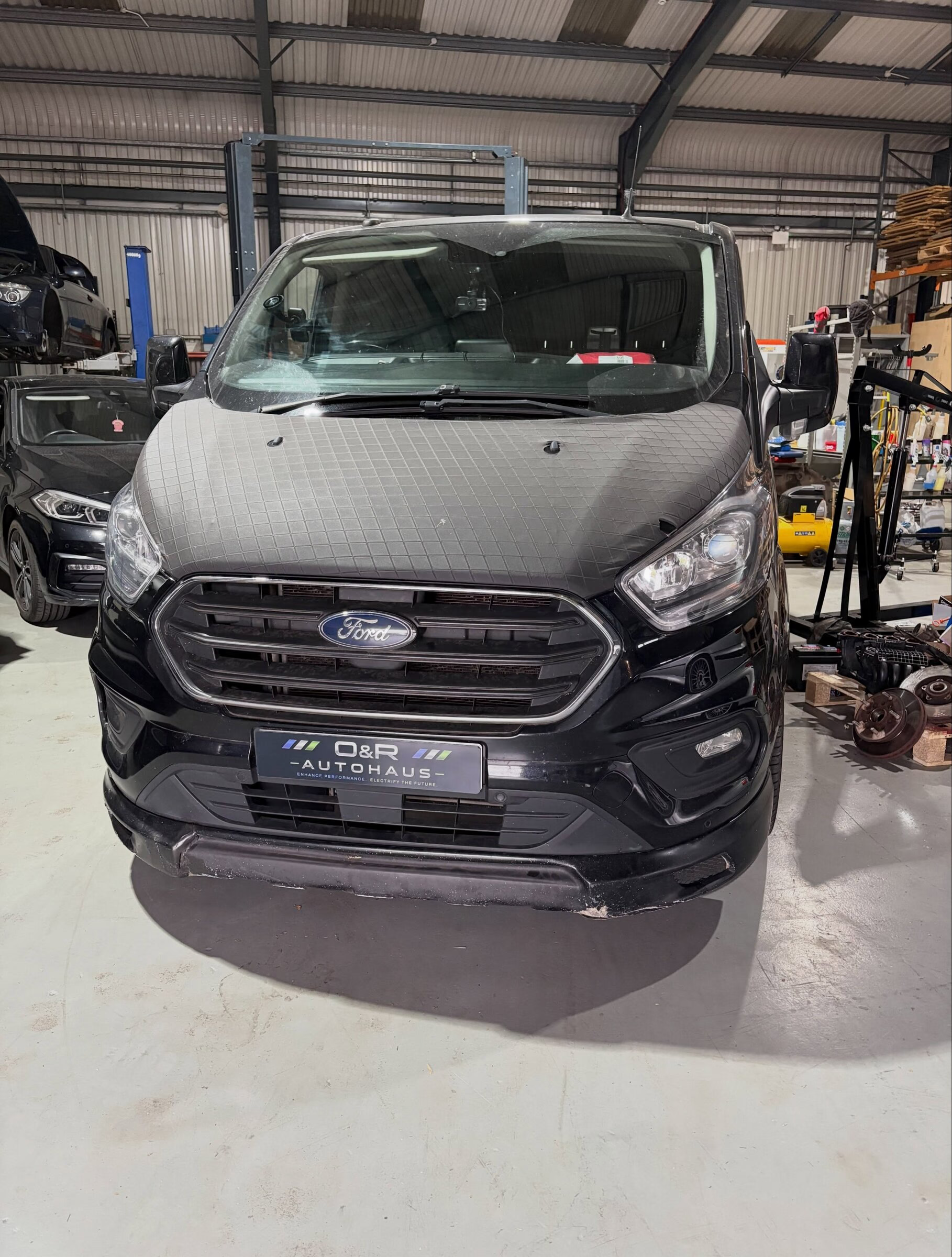
Outside the VW Group, Ford is the other big one, and it runs through both halves of their range. The EcoBoost petrols are the ones most car owners have heard of, but the EcoBlue diesels use a wet belt too, which is what puts most of the Ford commercial range on this list:
- Transit, Transit Custom and Transit Connect
- Ranger
- Fiesta, Focus, Puma, Kuga and EcoSport
The Ford jobs are the harder of the two. Reaching the belt, resealing the covers and setting the timing correctly takes most of a day. We do them, vans included.
When should it be replaced?
Against your car's own schedule rather than a number you read somewhere. Manufacturer intervals for wet belts have been revised more than once, and they differ by engine, model year and market, so a single mileage figure quoted across the internet is wrong for somebody. Tell us the car and we will check what applies to it.
What we would say generally: a wet belt is not a part to run past its interval on the basis that it sounds fine. A dry belt gives you a snapped belt. A wet belt can give you a blocked oil pickup first, and that failure arrives without warning.
What are the warning signs?
- Oil pressure warning light, which should stop the car immediately
- A rattle or whine from the belt area, particularly when cold
- Oil consumption or sludge found at a service
- Debris or fine rubber particles visible in the old oil or filter
The honest caveat is that a wet belt can be well on its way without any of these. That is why interval replacement matters more on this design than on a conventional belt, and why we would rather look at it than guess.
What we do about it
- Identify the engine properly, not the badge on the boot. The same model name covers engines with and without a wet belt.
- Check the oil pickup and the condition of the old belt, because the question is not only whether the belt is due but whether debris has already gone where it does damage.
- Replace the belt with the associated parts as one job, and reseal properly, because this is an internal belt and a poor reseal is an oil leak into the engine bay.
- Quote before any work starts.
Why bring a VW or a Ford to a BMW specialist?
Because the training is the transferable part. Main dealer work teaches a method before it teaches a model: diagnose before replacing, follow the documented procedure, prove the fix. We learned that inside BMW over more than twenty years, and it is the same discipline a wet belt job needs, which is one where shortcuts are invisible until the engine is apart again.
We are at Unit B2, Fram Enterprise Centre, Heol-Y-Sarn, Edwards Business Parc, CF72 8QZ, serving Talbot Green, Llantrisant, Pontypridd, Cardiff and Bridgend.
Send us the car and we'll come back to you
Two taps and it opens WhatsApp with the message written. We read it on the phone in the workshop.
Because the training is the transferable part.
Vans as well as cars
Send us the registration and we will tell you what belt it runs.